Shou Sugi Ban Cladding

Imgi Shou Sugi Ban Logo Rgb

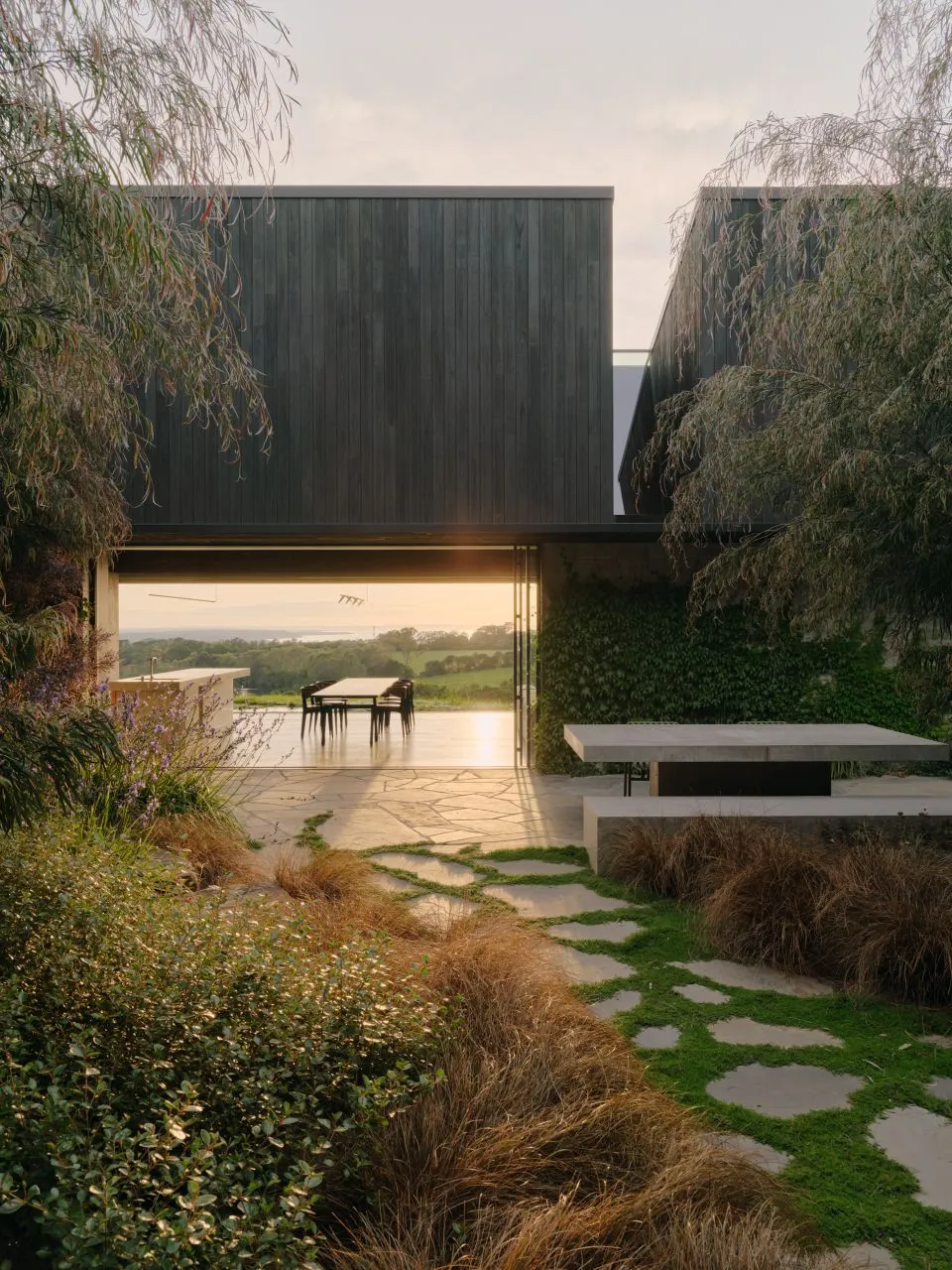
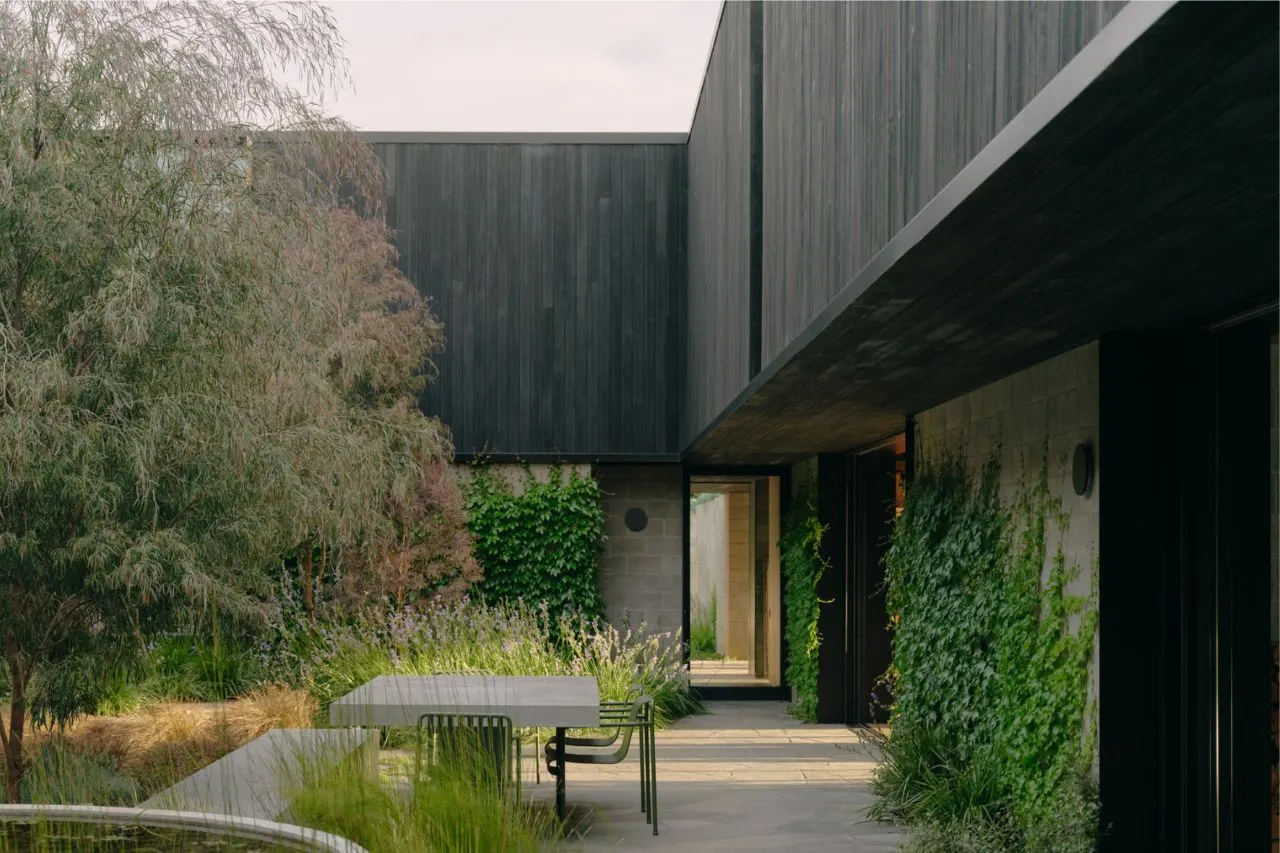
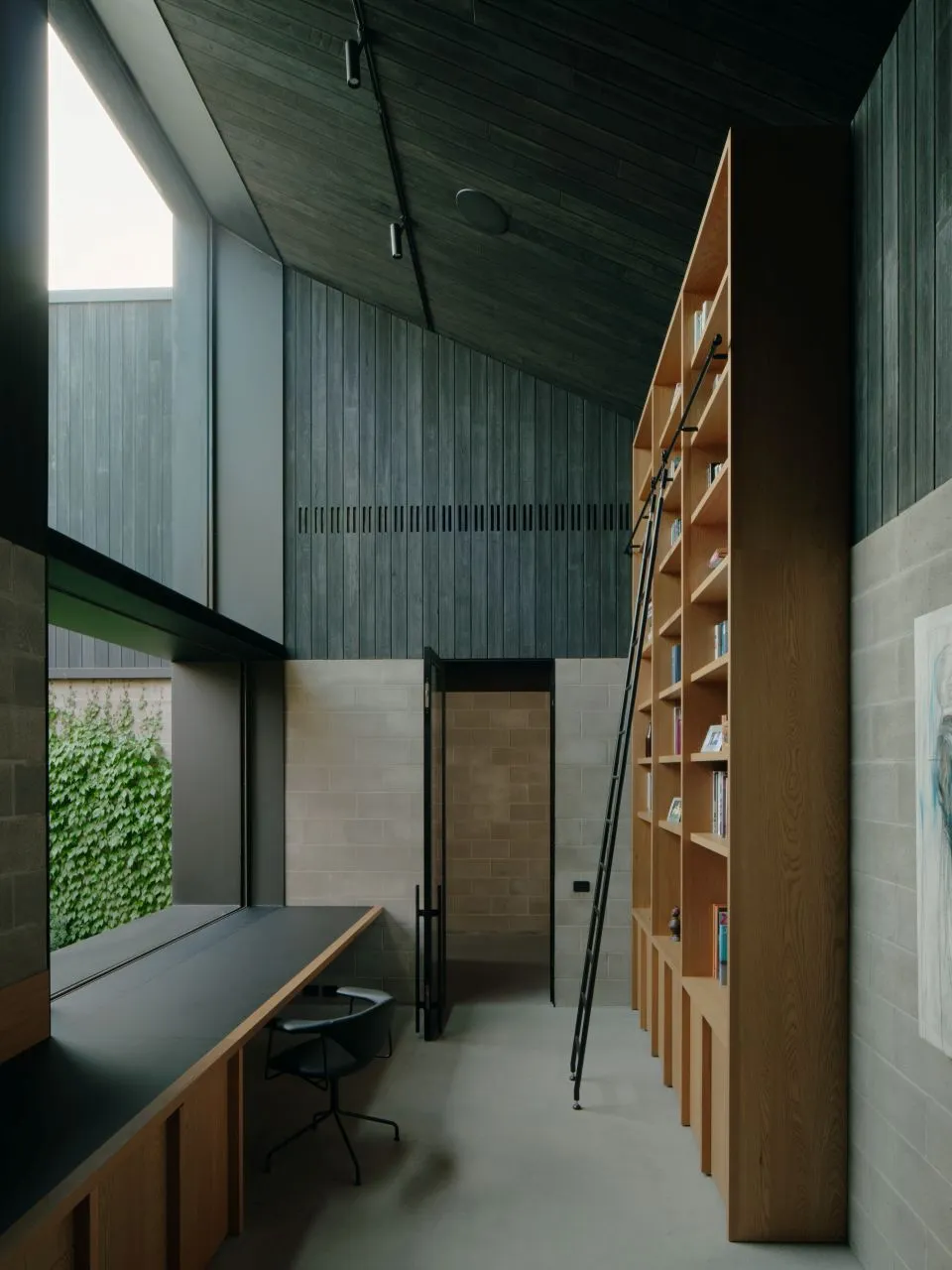
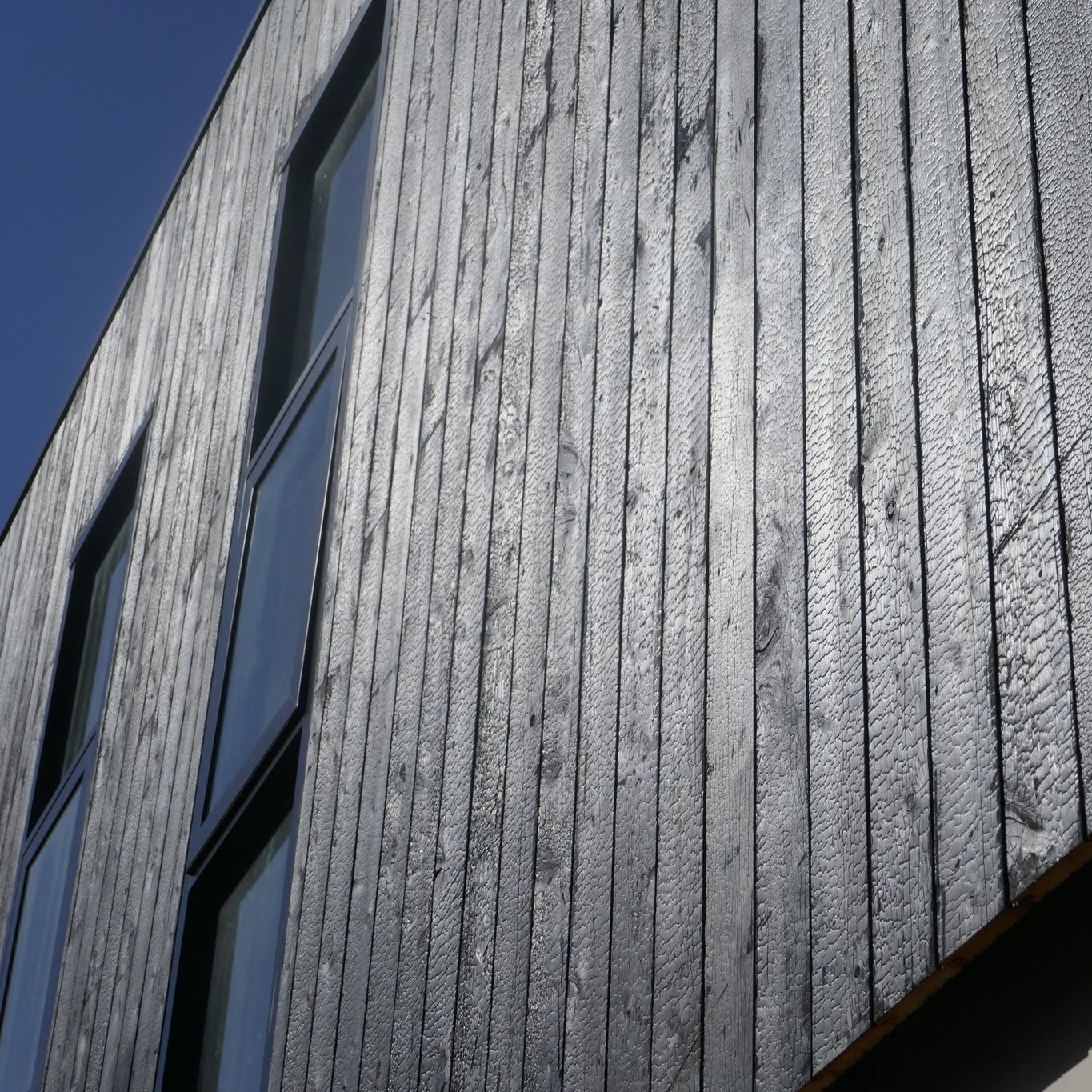
Shou sugi ban cladding is exterior timber cladding with a fire-charred face. The Japanese technique, also called yakisugi, adds resistance to weathering, insects and decay, and creates a deep black, textured finish. Hurford’s Shou Sugi Ban is a 21mm Coulee profile in 86mm and 136mm widths. It’s end-matched, concealed-fixed, made in Queensland, and supplied pre-oiled with matching aluminium trims.

About The Product

HURFORD’S SHOU SUGI BAN CLADDING A complete system.

Hurford’s Shou Sugi Ban Refined Architectural Cladding combines the ancient Japanese craft of fire treatment with a precision milled, architectonic cladding profile. It is a complete solution for any exterior wall, offering not just the cladding but a selection of customised trims to ensure a streamlined execution and a weathertight result. The timber species selected to manufacture Hurford’s Shou Sugi Ban are ethically sourced and processed by Hurford’s locally owned and operated facility in Queensland, Australia.

Shou Sugi Ban — also known as Yakisugi — is one of the world’s oldest timber preservation techniques, and one of the most striking. Originating in Japan, craftsmen discovered that charring timber with fire delivered the same prized durability as naturally weathered driftwood. The term 焼杉板 translates simply as ‘burnt cedar board’ — a process as elemental as it sounds.

Hurford’s Shou Sugi Ban uses durable Australian hardwoods. These timbers are sought after for their natural qualities. Applying the fire treatment provides an additional barrier of protection against insect attack and decay, further increasing overall durability. Hurford’s uses a modernised Shou Sugi Ban technique that evenly chars the face of the board.

  • Sustainably Sourced
  • Premium Timber
  • Consistent Quality
  • Long-Lasting
  • Trade Trusted
  • Versatile Use
Imgi SSB Complete System Badge
Imgi SSB Sustainable Choice Badge
Imgi SSB Fire Treated Badge

Product Information

Few cladding systems offer this combination: centuries-proven durability, a finish that genuinely cannot be replicated, and a complete installation solution.
The controlled charring process actively improves the timber’s resistance to weathering, insects, and decay — on top of species already selected for their natural toughness. Precision-milled profiles, end-matching, integrated trims, and moisture barrier features mean every component works together for a clean, weathertight result.
The aesthetic speaks for itself. The performance backs it up.

CLADDING

  • Profile: Coulee
  • Width: 86mm (68mm cover) & 136mm (118mm cover)
  • Thickness: 21mm
  • Length: Random
  • Moisture Content: 10% to 15%
  • Fixing: Concealed fixing
  • Species: Durable Australian Hardwoods
  • Joining: End-matched, micro bevel
  • Finish: Charred and then pre-oiled with two coats of sealer

SYSTEM FEATURES

  • Relief grooves to reduce warping and cupping
  • Screw location line for accurate fixing and secret fix finish
  • Profiled board shoulder for controlled expansion allowance
  • End-matched system with micro bevel to assist water drainage
  • Moisture Barrier System with factory-fitted gaskets

TRIMS

  • External Corner: Powdercoated Aluminium
  • Internal Corner: Powdercoated Aluminium
  • End Stop: Powdercoated Aluminium

Shou Sugi Ban Wear Photo

Weathering is part of the character.

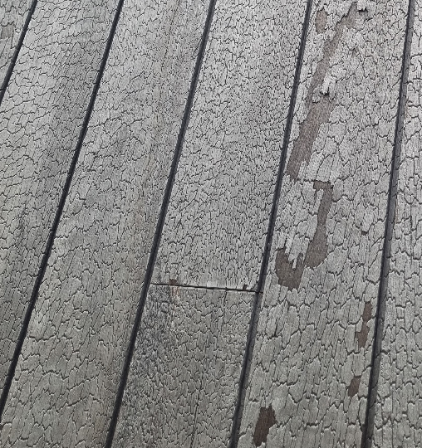
Over time, Shou Sugi Ban’s dark char transitions from black to greyer tones, and some surface flaking is normal, the nature of a thin char layer formed by fire and exposed to the Australian climate. This is a coating and colour change only; the durability of the wood beneath is unaffected.

Reapplication of the protective stain restores the darker finish when a fresher look is wanted, and recharring on site can address specific areas if needed.
Call 07 3442 6300 Request a Sample

DESIGN POINTS What to consider.

Timber is a natural and renewable resource, providing an environmental advantage over common building materials. Timber will only perform within the limits of its natural properties. When specifying, it’s critical that the characteristics and properties of the timber are considered when determining how they will respond to the environment they are placed in.

Timber is a hygroscopic product, which means that it will absorb or lose moisture depending on the environment it is placed in. When timber is placed in a high humidity (moist) environment it absorbs moisture and expands, oppositely when timber is placed in a low humidity (dry) environment it sheds moisture and shrinks. Although the species used to manufacture Hurford’s Shou Sugi Ban has a lower radial and tangential shrinkage rate compared to hardwoods used for the same application, and is kiln dried, it is important that local conditions are taken into account when planning.

Consider the level of sun exposure, wind, rainfall and humidity in the area. Identify any possibilities of extreme conditions and alter the designs to suit. Allowances made at design stage can avoid potential problems later on. Our cladding profiles allow for 2.5mm expansion and 7mm contraction which is sufficient for normal conditions.

At design stage it’s important to detect any potential water traps or ventilation issues that will increase the chances of the cladding being affected by moisture. Hurford’s Shou Sugi Ban cladding profile and trim designs provide water diversions to decrease the chance of any sitting water, although, the Moisture Barrier System does not eliminate the need for good building practice and meeting the Building Code of Australia. An appropriate waterproof flashing needs to be installed to ensure the installation is watertight.

Leaching of tannins occur when timber is exposed to rain which may cause staining on surfaces in contact with a timber product. Leaching can be problematic when using a hardwood cladding product if not prepared and maintained correctly. Hurford’s charred timber cladding is produced using a conifer species, Callitris glaucophylla which doesn’t leach, avoiding any potential staining issues.

There are six bush fire attack levels that are used to determine the appropriate construction to be applied to a development. Most metropolitan and suburban blocks are defined as BAL–LOW. These sites have no special requirements as there is a very low risk of bushfire attack.

In many parts of Australia, the construction of new buildings and additions to existing buildings will be assessed with a BAL rating. The relevant Australian Standard AS 3959 provides for a range of Bushfire Attack Levels (BAL) for proposed construction. Read more by visiting www.as3959.com.au 

It is well known that any timber left uncoated and exposed to direct or indirect sunlight will inevitably weather and grey off. Hurford’s Shou Sugi Ban Refined Architectural Cladding is no exception.

Shou Sugi Ban is supplied pre-oiled to assist in the protection from aging and colour change. During installation it is required you coat any sawn cut ends with Feast Watson Timber and Deck Stain, Black Japan.
Once Shou Sugi Ban Refined Architectural Cladding is installed, you need to apply a second coat of Feast Watson Timber and Deck Stain, Black Japan.

Periodic maintenance, including reapplying a fresh coat of Feast Watson Timber and Deck Stain, Black Japan is required to maintain the dark burnt texture of the product. Leaving the product unmaintained or uncoated will lead to the dark Shou Sugi Ban to naturally patina and age, changing its appearance. This change in appearance will not affect the performance of the product.

For more information on Feast Watson Timber and Deck Stain, Black Japan or to find a stockist please click on their website link www.feastwatson.com.au or call 1800 252 502. 


Do You Need Samples?

Our team can assist with timber selection, specifications, and project requirements across residential and commercial applications.
Sample Form

Related Products